Radon: What Every Denver Homeowner Should Know
Radon: What Every Denver Homeowner Should Know
If you have lived in Colorado for any length of time, you have probably heard the word "radon" tossed around. Maybe it came up during a home inspection, or maybe a neighbor just had a system installed and mentioned it. And yet for something so common here, radon is one of the most misunderstood issues around owning a home in Denver.
We deal with radon constantly in our work at
Focus Real Estate, so we wanted to put together a clear, straightforward guide that we hope is helpful. The goal here is not to scare anyone. Radon is manageable, testing is cheap and easy, and fixing a high reading is a routine, well-understood process. We want to help you understand what radon is, why it shows up so often in our corner of the world, and what the facts actually are..
What is radon, exactly?
Radon is a naturally occurring radioactive gas. You can’t see it, smell it, or taste it. It forms when uranium in soil and rock breaks down underground, and it seeps up into buildings through cracks in foundations, gaps around pipes and drains, crawl spaces, and even the tiny pores in concrete.
Because radon comes from the ground, every home has some of it. So the question is never really "do I have radon" (you almost certainly do). It is "how much, and is it high enough to do something about."
The reason it matters over long periods, breathing air with elevated levels of radon raises your risk of lung cancer.
The EPA has lots of helpful information on this, including the fact that radon is the second leading cause of lung cancer in the country (after smoking), and the leading cause among people who have never smoked. Nationally, it is linked to roughly 21,000 lung cancer deaths a year. Here in Colorado,
the state health department attributes more than 500 of those deaths each year to radon.
Those numbers are worth taking seriously. But here is the reassuring part: this is one of the most preventable risks in your home. A test costs very little, and a fix is straightforward.
Why is radon so common in Colorado?
Colorado sits on uranium-rich soil and rock, which is exactly the recipe for radon. The EPA classifies Denver (along with nearly every Colorado county) as a Zone 1 area, its highest-risk category.
The local numbers back that up. The Colorado Department of Public Health and Environment (CDPHE) estimates that about half of all Colorado homes test above the EPA's action level of 4.0 pCi/L (that stands for picocuries per liter, the standard unit for measuring radon). For comparison, the national indoor average is around 1.3 pCi/L. CDPHE has even noted that living in a home at Colorado's average radon level is comparable, in radiation exposure, to
getting roughly 200 chest X-rays a year.
Central Park is not exempt from any of this. Newer construction, older construction, all of it sits on the same Front Range geology.
Common radon myths—and what's actually true
"I don't have a basement, so I don't need to worry." This is probably the one we hear most. Radon does not need a basement. It enters through whatever part of your home is in contact with the soil, which means slab-on-grade homes, homes on crawl spaces, and homes with finished or unfinished basements can all test high. Where you spend your time does affect your exposure (a basement office or gym means more hours breathing it), but the foundation type does not determine whether radon is present.
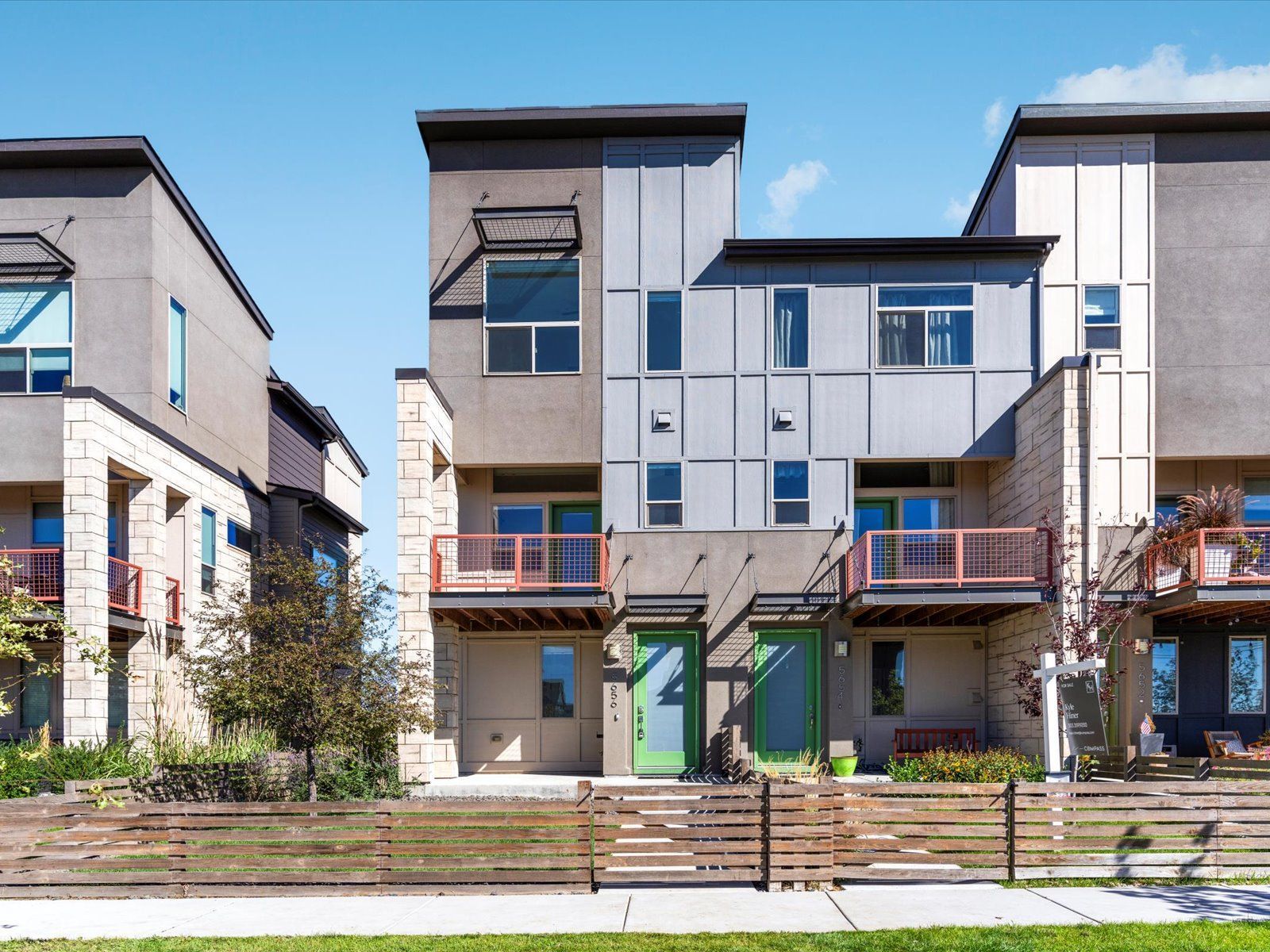
"I'm in a condo or apartment, so radon isn't my problem." Condos, townhomes, and apartments absolutely get radon, and that matters a lot in a neighborhood with as many attached homes as Central Park. What counts is contact with the ground, so ground-floor and basement-level units are most exposed as the gas seeps up through the slab and foundation. The EPA and the Surgeon General recommend testing every unit below the third floor. Higher units carry lower risk but not zero, since radon can travel up through stairwells, elevator shafts, and shared utility chases. Two condo-specific things worth knowing: each unit needs its own test (your neighbor's number tells you nothing about yours), and mitigation in an attached building can involve a shared foundation or common areas, which may mean looping in your HOA rather than going it alone.
"My house is new, so it's fine." Age has very little to do with it. Radon is about geology and how air moves through your home, not how old the structure is. Brand-new Central Park builds can and do test high.
"My neighbor tested low, so mine is fine." Radon levels can vary dramatically from one house to the next, even on the same block, because of differences in soil, foundation, cracks, and ventilation.
CDPHE specifically recommends testing your own home regardless of what a neighbor's results showed.
"I tested once, years ago. I'm good." Radon is not static. Levels shift over time with the seasons, soil moisture, snowpack, settling, new cracks, and changes to your home. A reading from five years ago does not tell you much about today.
"If radon were a problem, I would feel it." Radon causes no immediate symptoms. No headache, no cough, nothing you would notice day to day. The damage happens slowly and silently over years, which is exactly why a test is the only way to know.
Why testing every year or two makes sense
Because levels change, a single test is a snapshot, not a guarantee. CDPHE and the EPA generally recommend retesting every couple of years even if you have tested before. And if you already have a mitigation system, retesting every two years is the best way to confirm it is still doing its job, since systems can lose effectiveness over time.
The good news is that testing is easy and inexpensive:
CDPHE offers free radon test kits, one per household per year, while supplies last (order through CDPHE's radon program, or visit coloradoradon.info).- If the free kits run out, short-term DIY kits run roughly $10 to $50 at most hardware stores.
- For the most reliable results, you can hire a licensed radon measurement professional (around $150), which is also what typically happens during a real estate transaction.
What to do if your test shows higher levels of radon
If your home tests at or above 4.0 pCi/L, the EPA recommends taking steps to lower it, a process known as radon mitigation. The good news here is that this is a routine, well-established fix, not a renovation nightmare.
The most common approach in Colorado is called sub-slab depressurization. A contractor installs a pipe and a quiet fan that pulls radon from beneath your foundation and vents it safely above the roofline, before it ever reaches your living space. Most systems go in within a day, run continuously and cheaply, and reliably bring levels well below the action threshold.
A few things worth knowing:
Mitigation works. Properly installed systems consistently reduce radon to safe levels.- It’s more affordable than people expect. Most residential systems are a modest cost, especially weighed against the health stakes.
- It can be an asset when you sell. A documented mitigation system reassures buyers and removes a common negotiation hurdle.
- Help exists. Colorado runs a Low-Income Radon Mitigation Assistance (LIRMA) program that covers up to $1,500 toward a system for qualifying homeowners (CDPHE).
The real estate angle (why we bring this up with every buyer)
Whenever we help someone buy a home, we encourage a radon test as part of the inspection period, usually a 48-hour test performed by the inspector or a radon professional. It is a small cost that gives you real information before you commit. And if levels come back high, it simply becomes part of the conversation with the seller. Ooften the seller installs a system, or offers a credit toward one.
Whether you are buying, selling, or just curious about your own home, we are always glad to point neighbors toward trusted local resources and a good radon pro. Don’t hesitate to reach out if you’d like a recommendation.
The Central Park takeaway
Radon is common here. That is the honest reality of living on Colorado's Front Range. But common is not the same as scary. Radon is invisible, yes, but it is also easy to measure and very fixable. A free test kit and a weekend is all it takes to know where you stand, and if you do need a system, it is a routine fix that protects your family for the long haul.
So if you have never tested, or it has been a few years, consider this a friendly nudge. Order a kit, set it out, and cross it off the list.